Basic
Northern Mozambique has been affected by cyclones and armed conflicts for years. The health system is hopelessly overstretched. SolidarMed is scaling up its activities so that people can also access care in emergency settings.
Content
Content Media
Content Text
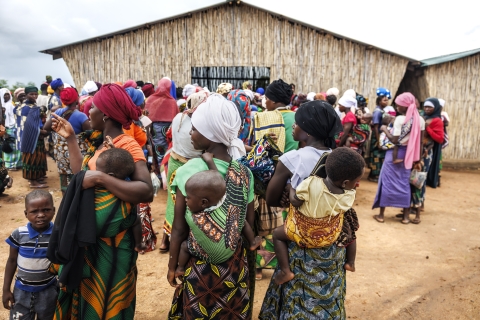
Cabo Delgado, July 2025: Attacks by armed groups forced more than 50,000 people to flee, the majority of whom were children. They then had to find somewhere safe to go, on top of the 800,000 people who were already internally displaced. The district authorities transferred people to so-called resettlement villages, consisting of emergency accommodation and tents.
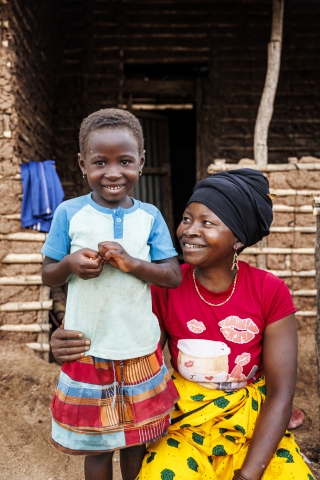
Fifty-nine-year-old Albertina Alberto and her six-year-old granddaughter Chana were among them. Albertina Alberto says: “When rebels attacked our village, we fled without clothes, without dishes, without anything. We didn’t even have a mat to sleep on. When we arrived in the new place, people told us that the rebels would tun up there, too. So we fled again, this time to Chiúre. And now we’re here at the resettlement camp in Maningane.”
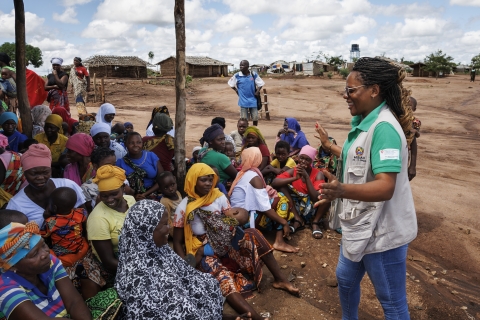
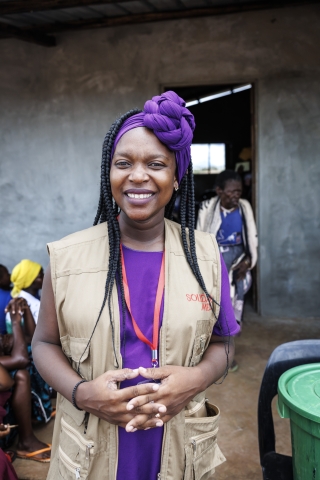
Ester Maria, SolidarMed project team member for infection prevention and control, describes the scene on the ground: “Cabo Delgado has been hard hit by armed attacks and cyclones. These crises leave psychological scars on the population because of their unpredictable nature: one day people will be in one place, and the next somewhere else. This leads to constant anxiety and uncertainty.”
Content Text
After the attacks in July 2025, SolidarMed developed a rapid emergency response, deploying 32 mobile emergency relief units to three resettlement centres and five particularly hard-hit reception villages. In view of the ongoing armed crises, SolidarMed continues to strengthen overstretched health centres and organise emergency response missions.
Content Text
Places without healthcare staff
Although the resettlement villages offer some safety, one of the greatest shortcomings is the lack of basic medical care. Alberto Tadeu, community leader at the Megaruma resettlement village, explains: “We don’t have any permanent healthcare professionals. We are reliant on the mobile health team supported by SolidarMed, who drop by once or twice a month. The continued displacement of people is further exacerbating the health situation. The distances make things very difficult for us. It is several kilometres from where we live to the healthcare facility. Previously, before the mobile unit was set up, we even lost a child to fever. When the child arrived at hospital, they were diagnosed with malaria, but it was already too late.” Tadeu’s desire to do more for his community is at odds with the limited resources and systemic gaps. SolidarMed funds medicines, fuel and the travel costs for the mobile emergency response team, who deliver vital medical care directly to the people affected.
Content Text
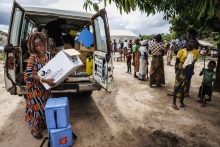
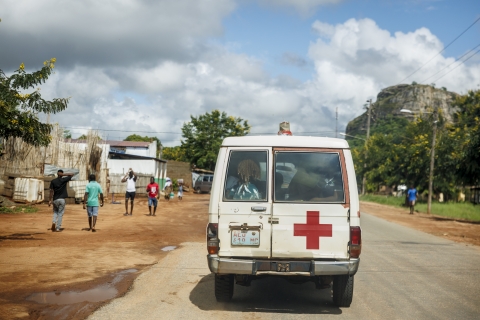
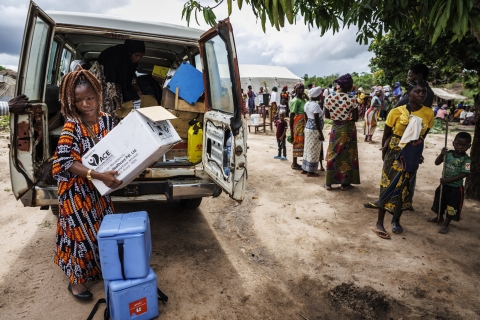
The health workers from various fields such as psychology and paediatrics set off early in the morning from Chiúre District Hospital. The vehicle is loaded up for medical examinations: with tables, chairs, rapid malaria tests, malnutrition screening armbands, medicines. The 20-kilometre journey takes them on roads strewn with potholes, past green vegetation and mountains. Although the journey only takes a short time by car, many villagers remain completely cut off from basic healthcare.
Content Media
Content Text
Surviving malaria and scabies
At the Maningane resettlement village, Albertina Alberto and Chana are waiting for the emergency response team for a follow-up examination. Because here, too, there are no permanent healthcare workers. Albertina Alberto says: “When my six-year-old granddaughter got a fever and rash all over her body, I wanted to go to the hospital in Chiúre but I couldn’t afford it.” The inquisitive yet shy Chana never leaves her grandmother’s side and does exactly as she is told. Albertina’s demeanour is assertive – shaped by years of hardship – but her concern about Chana’s health is clear from her every gesture.
She goes on: “And then a mobile emergency response team turned up in our resettlement village. They are great! I say that from the bottom of my heart. My granddaughter received treatment and can now pound foods such as cassava at home. I also had pain, but thanks to the treatment I now feel better and can work in the fields again.”
Content Text
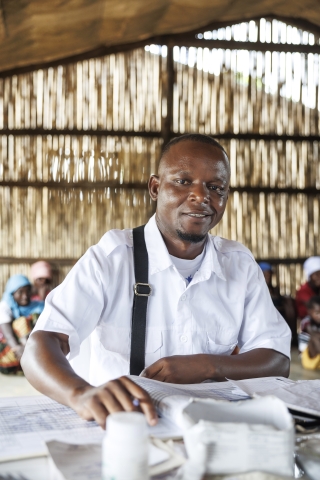
Healthcare worker Mario Moises is part of the emergency response team. He usually works at the hospital in Chiúre. He explains: “Even at the hospital we wouldn’t be able to travel out to the villages without SolidarMed due to a lack of resources such as vehicles. And because the resettlement villages are a long way away, many people are unable to come to us. So what do we do with SolidarMed’s support? We go with the emergency response team to deliver healthcare to those who need it.”
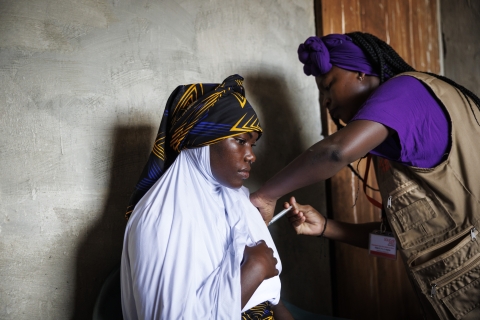
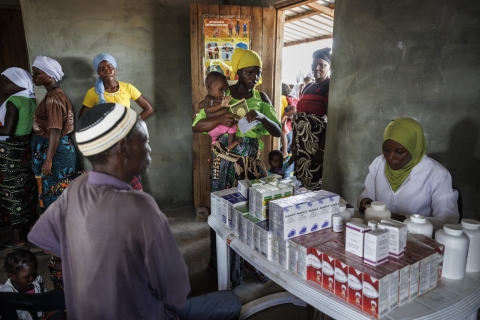
Today, Mario Moises is working without a break. Days like these bring a surge of patients but h rarely slows down as time is short and needs are great. It is a matter of survival. “Chana is six years old, and at our last visit she weighed just 16 kilos. After diagnosing malaria and scabies, we gave her the necessary treatment. I’m happy because I can see that she’s doing better now.” Albertina Alberto adds: “I say to everyone: if our children are sick, we have to take them to the mobile emergency response team.” The units supported by SolidarMed deliver important medical services: emergency treatments, vaccinations, youth counselling, and maternal and newborn care. They gather data on health needs and gaps in healthcare provision.
Content Text
Based on these emergency response missions, SolidarMed has now launched a comprehensive project in Cabo Delgado that is designed to strengthen healthcare in crisis settings and build long-term resilience – through mobile health teams and institutionalised emergency planning. Ester Maria says: “I’m proud to see real change happening: problems are being recognised, solutions implemented and improvements maintained in the long term, whether in relation to cleanliness, the organisation of services, or data quality. Our work is having an impact and local actors are taking responsibility.”
Teaser Spenden
Your donation helps people in difficult circumstances access much-needed healthcare. Thank you very much for your support!